The Cricut Seems to Be Ripe For the Hacking

My Cricut

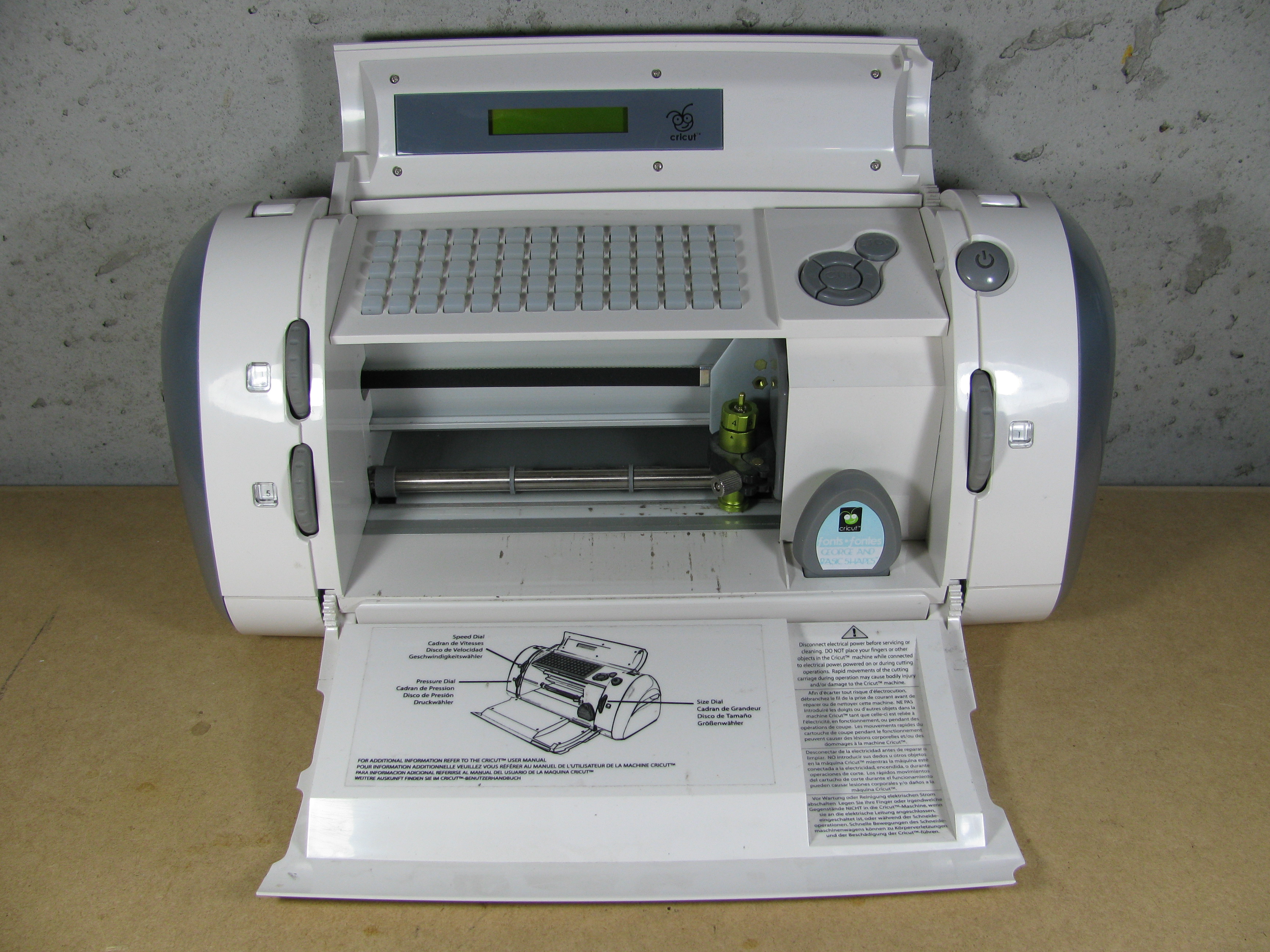
A member at the hackerspace donated a Cricut 6″ cutter when she upgraded to the Expression model.  I’ve seen these little devices in most craft stores and even Wal-mart, and they seem ripe for the hacking.  The Cricut line of personal CNC paper cutters appear to have been looked into on a number of occasions from what I could find, but I didn’t really find any good resources for information on hardware hacking other than a couple simple hacks and the discovery that the Cricut USB link was actually an USB to RS232 connection.  I also didn’t find any open source or homebrew software to turn these devices from advanced scrapbook die cutters to general purpose CNC paper cutter/plotter/whatever.  I really want to play around with this thing (including trying to mount a spindle on it for crude PCB routing, among other things), but it looks like someone still needs to do a little leg work to make that happen easily.

What I did find is that there are  a few proprietary software packages out there (Sure Cuts A Lot and Make The Cut) that allow you to place and cut TrueType fonts and SVG format vector graphics.  This coupled with the fact that the device was using an RS232 link to do the actual communication to the on board microcontroller led me to believe it should be trivial to back-engineer the command protocol.  I downloaded the trial versions of the available 3rd party tools and grabbed a few windows serial port sniffing applications and set off to start logging communications.

Unfortunately I found that no combination of serial sniffer and control software seemed to work out.  I can easily use the serial sniffers to look at the transactions of the Arduino bootloader and the host application over the USB to RS232 link, but I see no activity with the 3rd party Cricut software.  I can set up a USB sniffer link and log data, but these logs are relatively verbose and I’d like to use a more elegant solution to log the RS232 data directly.

Since I’m more comfortable with the hardware side of things, I’m currently focusing on the problem from that angle.  I didn’t want to start chopping up the space’s Cricut, I set out to acquire my own for the task.  I managed to scoop one up for $60 with no cartridges from an individual who upgraded to the Expression as well.  Stay tuned for some hardware dissection notes as I take my personal unit apart!

Tags:

6 Responses to “The Cricut Seems to Be Ripe For the Hacking”

  1. Emma says:

    So I have a cricut expression and it fell over, when it did, the size got stuck on 2 inches. I took the thing because I thought there would be a gear that maybe needed fixed, nope, it was a motherboard type looking component it says VZencoder, E252800 with a back stamp of ZD and something that looks like a backwards R and a U JD-F, any idea where I could get a replacement part?

    Thanks, p.s. your documentation ROCKS!

  2. Craig says:

    I haven’t taken apart an Expression yet, but I imagine it’s got a little more under the hood than the Personal. Nothing came up immediately in any searches for the component you’re describing, but from your description it sounds like the Expression might use rotary encoders (here’s an example of one that’s sold by SparkFun) instead of potentiometers to set the size, pressure, etc. One clear indicator that it’s using rotary encoders would be if the dials can be rotated more than one rotation. I don’t have access to an Expression right now but I’ll let you know if I get the opportunity to take one apart.

  3. Kansas says:

    I have a pretty simple tutorial on my blog for making the George & Basic Shapes Cartridge. Almost everyone hasn’t had any problem but a couple of people are saying after making it their cricut no longer recognizes any other cartridge. One woman first tried testing with the paperclip method so I don’t think I’d say it was the homemade george but the other one strictly used the homemade cart. Resets were tried, unplugging, etc… nothing works. I’ve searched online and found nothing regarding this problem or a way to fix it… I came across your blog and you seem to know the “insides” pretty good, any ideas why this happened or how to fix it?

  4. Kansas says:

    Almost forgot:
    PS I do have a disclaimer at my blog if one does make the george cart but am seriously thinking of pulling the whole post. It’s just that I see over 5000 views on the message board and only two (possibly 3) people have had this problem.

  5. Kevin says:

    Hey everyone,

    If it helps, I did the cartridge hack on my wife’s Expression, and I can note two things:

    1. The hack works, I get the george/basic shape cart.
    2. The board looks pretty similar to the standard Cricut. It is a little more difficult to open I think. The board is off to one side, and the wires leading into the unit are very short, so it’s hard to pivot the bottom down as much. However, it does appear to be the same board.

    Obviously the display is a little different, but it probably takes the same number of pins to drive, so the mainboard is likely the same.

    I’m guessing the carts are interchangable as well? I’m not sure on that point, but I would guess they only contain vector files, etc, and the actual allowed dimensions are controlled by the firmware in the unit.

    Hope this helps someone, and thanks for the hack. I bought our expressions off of Ebay for $180, with no cartridge, so this saved us a few bucks!

    -Kevin

  6. Craig says:

    It’s possible that they have accidentally shorted a couple of the pins together when trying this, probably one that’s connected to the ground or power and one of the other pins. This can break your Cricut permanently if you blow one of the pins of the micro controller (chip makers call this Electrical Over Stress or EOS). You really need to be careful when sticking little metal bits into any sort of socket, the Cricut is no exception!

Leave a Reply